
For more coverage of PBS, visit The PBS Story.
I think it’s fair to say that when you ask many people about PBS, “digital first” is not one of the first things that come to mind.
But PBS Digital Studios (PBSDS) is a thriving part of the PBS business and it is increasingly reaching an audience that PBS has struggled to reach in the past - those who have outgrown the network’s kids programming but aren’t watching much of the networks’ non-fiction programming.
PBSDS averages over 20 million users and 50 million views monthly on YouTube. It creates original short‑form series exploring science, history, arts, and culture and it also uses the programming as an incubator for developing talent for other platforms as well as linear television.
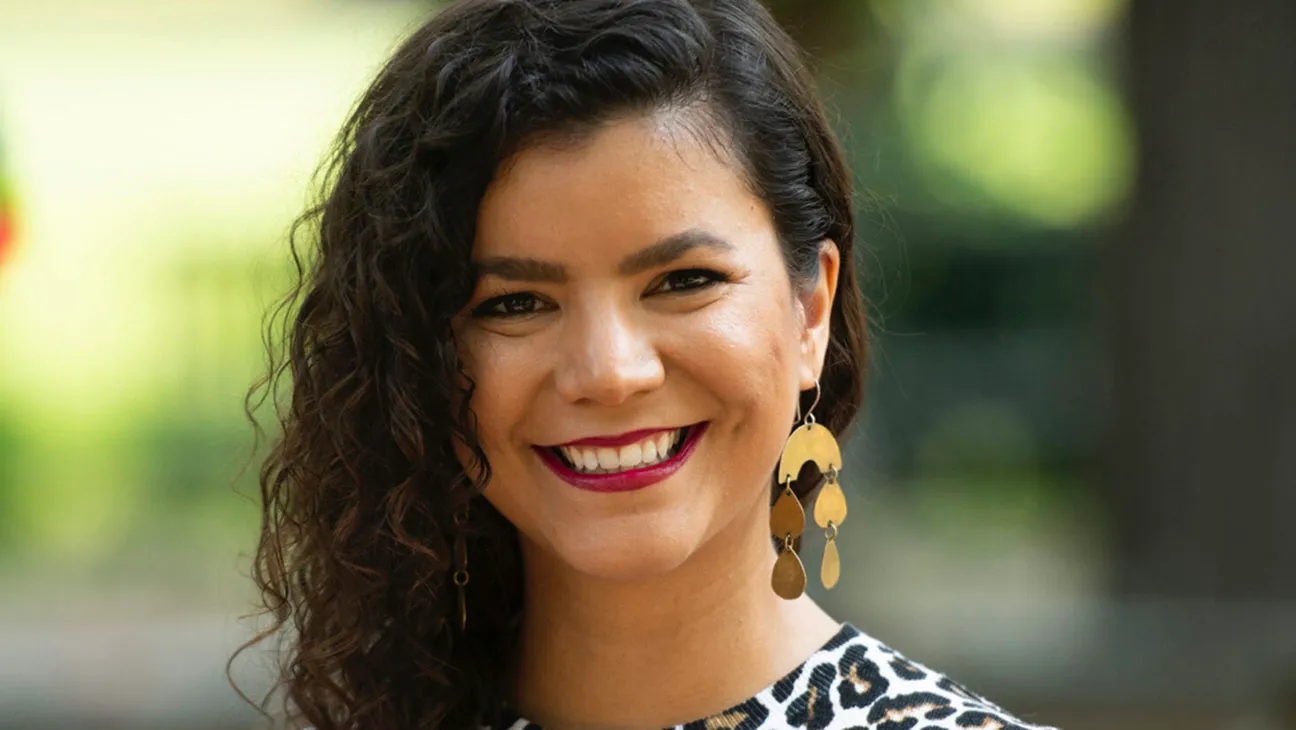
I recently spoke with PBS Digital Studios head Maribel Lopez at the StreamTV show in Denver, after a panel she appeared on entitled “The Public Media Powerhouse, How PBS Dominates the YouTube Ecosystem.” We spoke about how the network approaches its digital efforts and the importance of the PBS brand when it comes to building trust with YouTube videos.
The following conversation has been lightly edited for clarity:
One of the things that fascinated me in the panel, was that you were talking about the idea of not greenlighting a project until they had the thumbnails, which is a great idea. But I also think it's one of those things that people might not think about as being important for digital content discovery.
Maribel Lopez: No, no. I mean, I'm being a little facetious, right? But we really want people to think about the entirety of this piece of content.
There might be a wonderful story there, but if it's not positioned in a way that people are going to be enticed to click on it, and let's be honest, if you go on YouTube, there are so many options, and we need to stand out.
So I think the important piece there is to just get the producers to start thinking about what would this look like. How would we present this in a sea of a bunch of other stuff on a platform like YouTube? And that's not how they've always had to think.
So we just want to encourage that thinking early and often in the process.
Especially with YouTube, there's a lot of analytics to wade through. But there's a lot of learning as you go. And I suspect that maybe what is popular now is now is not the same thing as it was a month or six months ago. So how do you use data as a way to try and inform where the audience is headed and what types of content you should be producing?
So we do look at a lot of data. We're looking at different sets. I would say we've got our real-time data insights, which would be things like what are the thumbnails doing? Are people clicking? How long are they staying and watching those sorts of things?
And then there's the longer view with data. After it's been published for 28 days, for three months, we know that a lot of our programming on Digital Studios is pretty evergreen. So it can take on a whole other life of its own later on, and we want to set it up for that.
So we will look at that data in a long view and a big picture to see, "What are the trends of topics for, say, history, broadly, that are really standing out?"
And then that can help us in our decision-making. It's not going to drive everything we do. At the end of the day, we're driven by the mission of PBS, but it can give us some insight that people really are interested in XYZ, you know, sub-theme within history.
How can we make sure that we can continue to deliver, go deeper maybe on that, right? Maybe come up with a whole new concept for a show that is really focused on that specific topic. So it's really interesting to always have the data in front of us.
But more broadly, our mission is where we need to be. This is public media. We're driven by that. And then being able to use that information to really super-serve the viewers.
You're talking about the importance of the PBS brand. But - as it come up in the panel - it's a typically older brand. And so you want to do stuff that resonates with someone who's 25. But also stays true to the brand. I suspect that that's sometimes a little challenging.
It can be. And I think that there's endless creativity, right? There's endless ways to tell stories.
And we've tapped into that. We see around us and what resonates for young people on these platforms. And we can do that in a way that is still smart, still earnest, still rigorous and follows the same editorial principles and practices of the rest of the PBS universe.
So I think it's just a matter of really leaning into that creativity of our creators, our producers, and then remaining true to ourselves, like who we are at our core.
You can be funny and you can still be smart. You can tell jokes and you can still be really earnest and really curious and all of that. So it's definitely possible to find that tone and strike it just right.
One of the trends in the industry is this idea of working with creators, working with influencers, and how does that fit into your strategy?
Since the beginning of PBS Digital Studios, a lot of it driven by creators. And we still actually work with some folks who've been across our shows for 12-plus years. Dr. Joe Hanson is one of them in his show, Be Smart. And now with vertical video, working with creators on that kind of content, we're leaning even more into that.
I see it as kind of an opportunity for us as a really, cherished, prestigious, trusted, rigorous, journalism entity, to be able to share that knowledge, share that expertise with creators who bring their own expertise, who bring their own craft, their own creativity, and share that with our audiences, sharing those practices.
And so we're working with creators by letting them be authentic, do the storytelling in the way that they want to and the way that their audience really loves them for. While infusing the type of work that we're known for as public media.
You know, if you talk to any executive, they always have some pet project. They'll say “I loved this thing, I can't believe that the audience didn't pick up on it.” Do you have something where you loved it and you thought, "Oh, this is going to be great, it's going to be wild," and then for whatever reason, the audience just said "Maybe not."
Well, I will say, whenever we launch something new, as much as we are leaning into the mission, leaning into the data insights that we have, you never know. It may not land. It requires a little bit of runway.
So I'm heartened when there's a show that maybe has a little bit of a slow start, but then we see it sort of improve and iterate and grow. And then it comes back for another season and folks are like, "I'm so glad this series is back," and we see that growth, right? So I don't have a specific title, but, yeah, it happens.
Are there some categories in general that don't work for whatever reason? Obviously, history, science, I've watched a lot of the digital programs, and that seems to be stuff that worked really well for you.
Yeah. So I will share this insight. We have tried across different genres stuff about sports.
And it's tough. Whether it's the science-heavy part of it or, you know, a history story with a through line related to sports, it just hasn't worked for us.
In fact, we do an audience survey every year where we ask maybe 20, 25 questions. We get a really great sample size. The audience wants to tell us what they think. And we've asked specifically about that question.
We ask about a bunch of things. And sports just always tends to rank a lot lower as far as, like, topics, you know? But we're still interested.
Because we've got the Olympics coming up. So it's comes down to thinking "Is there something there that we haven't tried with that angle and that theme of sports? You know what I mean?
It's interesting. Because our Digital Studios audience isn't our linear audience. They're not the same. But PBS doesn't really have a long history of doing sports appropriately. So it's not really the thing we're known for. And so maybe that's part of it? I don't know.
What kind of connection do you have with local stations? Because depending on the station, some stations do a lot of digital, some don't. How does that fit into your content mix?
I'm glad that you asked this question because I started at PBS Digital Studios almost five years ago when I came from the Twin Cities station. I actually interned at my hometown station in Iowa, at Iowa PBS. So it's in my blood at this point.
So our work with member stations, that was something I was really excited about when I came to PBS National. Having come from a local station and thinking about how do we support the system in their digital production efforts and getting stations to a point where they're feeling really confident about the best practices and how to really present great content on platforms like YouTube?
And I did some of that while I was at TPT. So when I started, there was a grant where we designed this program to work directly with member stations on productions. They would be producers working with digital studios on original series and also receiving trainings, workshops and webinars from my team, along with that kind of guidance for them to really learn while they're producing these shows.
And, sadly, that was a CPB-funded program, but we were able to work with, I think, it might have been 10 stations and 11 series came out of that work. But we continue to do that, despite the fact that CPB was really the one kind of funder that would support something that is so system-oriented. We continue to do that, and so we're working with new stations.
Actually, we're starting the third season of a show that came out of that grant that I just talked about called In the Margins. Three new stations will be producing for the same series, and they'll each have a handful of episodes that they will get to produce for the show. And it's also a training program.
They have trainings and workshops once a week this whole summer before they even get into production. So it's one of those things where we know there's a lot still of room to grow in the system.
And if not us, who is going to work and partner with these stations? So we're going to continue to do that.
We also do things like we have PBS stations reach out to us as they're going through their own YouTube channel. And we'll do YouTube audits where my team will go in and provide an analysis. They'll provide recommendations for how the channel could be rethought. And the station can actually implement some tactics like I talked about just now to almost immediately start to see their channel evolve and grow.
And so we'll also have calls with stations who are thinking of launching a new digital series, and they're just looking for kind of a sounding board. And we can give them our own thoughts to them and consult, if you will. Give theme tips, advise a little bit as they work more deeply into that digital strategy.
So those are just a few of the touch points that my team really tries to do. We know that if the system gets stronger in this space, then all of us will rise. We are a system for a reason.
I wanted to wrap this with a questions about the impact the federal recissions had on what you do?
That example I just gave, while we were able to execute on that whole grant over the course of three years, we wanted to do it again. And we were talking to CPB about doing sort of a round two, more stations, more capacity building, and so that was really one of the big things that was lost due to the federal cutbacks.